How to Write a Memoir (A Ghostwriter’s Step-by-Step Guide)

Every memoir client I’ve ever worked with asks me some version of the same question on our first call: “Will anyone actually care about my story?”
My answer is never a warm hug. Readers don’t buy a memoir because the author lived an important life. They buy it because the book promises a specific experience (escape, courage, a good cry, a way through the worst year of their own life) and then delivers it. Learning how to write a memoir is mostly learning how to keep that promise.
I do this for a living. As a memoir ghostwriter, I’ve worked with Silicon Valley founders, Olympians, and NBA players, and a typical client memoir takes me eight to twelve months and lands between 60,000 and 80,000 words. Before memoirs, I was a Hollywood TV writer, so I still see every life story as a season of television. (Structure is my love language. Sorry in advance.)
To write a memoir, decide why you’re writing it and who it’s for, then investigate your own life: interview the people who were there and dig up the diaries and photos. Find the conflict that keeps repeating (that’s your theme), build a memoir outline, draft in scenes, and revise with outside readers before you hire an editor.
Below is the process I use with clients, adapted into eight steps you can do yourself, plus a set of writing prompts from my unreleased book on memoir writing, which you can get free right now. Let’s dive in.
🎁 Get My Unreleased Book, How to Write a Memoir, Free


This guide covers the steps. The book covers everything: 151 pages and sixteen chapters of my full memoir method, eleven Case Files from my client work and my own life, writing prompts at the end of every chapter, and a whole section for ghostwriters. I started writing it in 2021, then rewrote the entire draft in coffee shops in Athens, Greece, while I recovered from one of the worst illnesses of my life (fueled by way too many Freddo espressos). It has never been published anywhere.
To get it, preorder my new novel, Let Me Be Your Ghost, from any retailer in any format, then claim your free copy of How to Write a Memoir here. The PDF and EPUB land in your inbox. The novel is a romantic thriller about Lola Whitman, a memoir ghostwriter with secrets of her own, and it comes out November 18, 2026.
How to Start a Memoir
The first four steps happen before you write a single chapter. Clients always want to skip them. Please don’t.
Step 1: Know Why You’re Writing It (and Who It’s For)
“Why am I writing this book?” is the first question I ask every client. Some want a story to pass down to their grandkids. Others want a commercial hit that grows their business. Both are great reasons, and they produce very different books, so decide before you start.
Then picture your reader sitting across the desk from you, asking to hear your story. What do they want from you? Courage, a laugh, a map out of the same mess you climbed out of? Write to that person.
I learned what telling my own story can do when I came out as bisexual in an essay for the Los Angeles Times. Readers still email me to say it helped them tell their own truth. A why like that will carry you through a rough draft better than any writing schedule.
Step 2: Be a Detective in Your Own Life
Back in 2021, I wrote that the beginning is my favorite part of the memoir process: diving into the pool of someone’s memories and swimming around, looking for meaning. I still call it being a detective in your own life, and the first rule of detective work applies. Never trust a single witness, especially when the witness is you.
Your memory edits itself. In a 2009 study, psychologists Richard Walker and John Skowronski found that the emotional sting of negative memories tends to fade faster than the glow of positive ones. It’s part of how we heal, and it’s also why memory alone makes an unreliable narrator. So gather evidence:
Primary sources. Diaries, letters, old social media posts, home videos, your camera roll. If you were writing a research paper about your life, these would be your citations.
Interviews. Ask family and friends what they remember about the moments you shared. Use open questions (“What do you remember about me in high school?”) instead of yes-or-no ones, and buy them lunch for their trouble.
Your senses. Cook the family recipe, play the album from that summer, find the perfume your best friend wore. Smell and taste pull up memories a photo can’t.
When someone remembers an event differently than you do, don’t argue. Get curious. Why do they remember it that way? The gap between the two versions is often where the story is hiding.
Step 3: Find the Conflict That Keeps Repeating
Every memoir has two layers: what it’s about (the plot of your life) and what it’s About, capital A (the theme). Educated by Tara Westover is about leaving a survivalist family in rural Idaho for a PhD at Cambridge. It’s About what we choose to learn and unlearn from the people who raised us.
The fastest route to your theme is conflict. List the big ones: you against yourself, you against another person, you against your environment, you against a belief system. The conflict that shows up in every era of your life is your theme. Write it at the top of a page, because it’s about to boss your outline around.
Step 4: Decide What Kind of Memoir You’re Writing
A grief memoir and a business memoir need different playbooks, so name your type early. A few of the common ones:
Transformation memoir. You started as one person and ended as another (Educated, Wild).
Travel memoir. An outer journey that mirrors an inner one (Eat, Pray, Love).
Mosaic. Linked stories instead of one continuous arc (Trevor Noah’s Born a Crime).
Business-hybrid memoir. Your story plus the frameworks that got you there. It’s the type I’m asked to write most.
Legacy memoir. Written for your family and the people who come after you, not for the market.
Then pick two or three comps (published memoirs your book would sit beside on the shelf) and reread them like a detective instead of a fan. Where does chapter one start? How does the author handle the boring years? Steal the architecture. The furniture is yours.
How to Write a Memoir Outline
I outline every client memoir twice before I draft a single word of it, first in parts, then in chapters.
Step 5: Build a Macro Outline (Parts, Not Chapters)
My first outline for any book is what I call a macro outline: three to five pages that cover the major storylines and turning points and split the book into parts, not chapters. In TV, a season needs twists and reversals to keep you watching, and a memoir needs the same juice. Five parts work beautifully for most memoirs:
Your ordinary world, and the first crack in it.
The big leap. The pursuit, the move, the mission your back cover promises.
The reversal. The midpoint where what you wanted collides with what you needed.
The dark stretch. The relapse or complication that tests everything your story has argued so far.
The landing. Who you are now. Keep it short and memorable.
At the top of the macro outline, write your theme and one sentence about your reader. Then decide how much of your life the book covers. A first memoir almost always works better as a story from your life than as your whole life story. Shonda Rhimes wrote a bestselling memoir, Year of Yes, about a single year.
One warning: structure is a diagnostic, not a mold. Use it to find what’s missing or mushy in your outline, and never invent a beat your life didn’t give you. Readers can smell the drywall.
Step 6: Turn It Into a Chapter Outline
Once the macro outline holds, break each part into chapters. Give every chapter a working title and a few bullets:
The change or realization that happens in it
The scene or memory that anchors it
How it ends, ideally on a hook that makes the next chapter non-optional
Your chapter outline is the cheapest place to fix your book. Moving a chapter in an outline costs an afternoon. Moving it at 55,000 words costs a month. Clients have told me the outline alone helped them see their story more clearly than ever.
Write the First Draft in Scenes
Step 7: Write the First Draft (Messy Is the Assignment)
Write every day, even if a bad day only gives you five words. The compounding adds up to a book. Some of my own drafts come from the opposite approach, clearing the calendar and living inside the book for a few greedy weeks. Both methods finish books. The only wrong method is the one that keeps you researching methods instead of writing.
Here’s the mechanical difference between a memoir people finish and one they abandon: scene versus summary. Summary tells us about your life from a distance (“my twenties were chaotic”). A scene puts us in the room: the overdrawn account, the phone lighting up, the roommate pretending not to listen. Summary is the hallway between rooms, and the moments your book exists for have to be scenes. They’re the hardest part of memoir. I build them for clients all day, and they’re still hard.
After the scene, step out and tell us what it meant. Scene, reflection, back into scene. Reflect too little and your book reads like a police report. Reflect too much and it’s a sermon.
You won’t remember dialogue word for word, and readers know that. Write lines that are true to the person and the moment. My personal policy is writing people about 20% wittier than they were. Nobody has complained yet.
And please don’t hand your draft to a chatbot. I use AI tools openly in my business, and they’re useful for process work like transcribing interviews or sorting old journal entries. But your voice is the one thing in this project nobody can fake. The tools can imitate structure, but they cannot mint soul.
What Not to Put in a Memoir
Being the detective in your own life means uncovering everything. It doesn’t mean publishing everything. Leave out:
Pain for its own sake. Your book doesn’t have to be a diorama of your trauma. You’re allowed to keep things to yourself.
The Trauma Olympics. Don’t rank your suffering against anyone else’s. It never reads well.
The flattering edit. Readers can feel when you’ve rewritten your past to look good, even when they can’t say why.
Your entire contact list. If three friends played the same role in your life, a composite character can make the story easier to follow, as long as it still feels true.
Claims about real people you can’t back up. Change names and identifying details, and if your book makes serious claims, pay a publishing attorney to read the manuscript.
I’m a ghostwriter, not a lawyer, so get real legal advice for anything spicier than a name change. And if digging into your past knocks the wind out of you, take breaks and lean on friends or a therapist. The book can wait a week.
How to Revise a Memoir (and When to Call an Editor)
Step 8: Revise With Outside Eyes, Then Bring in the Pros
Finish the draft, then put it in a drawer for a few weeks so you come back with fresh eyes. Next, hand it to early readers who will tell you the truth. Before Write for Money and Power came out, it went to more than 90 beta readers (!!). Ask yours three things: Where did you get bored? What confused you? What hit hardest?
Sort every note into buckets, then fix the big structural problems before you polish a single sentence. After that, bring in the professionals in this order:
Developmental editing for structure and pacing
Line editing and copyediting for your sentences and consistency
Proofreading for the typos that survived everything else
I break down what each editor does and what they cost in my guide on how to hire a book editor. Then pick your publishing path. I’m biased toward self-publishing (a book deal is book debt), and I explain why in self-publishing vs. traditional publishing.
5 Memoir Writing Prompts From My Book
Every chapter of How to Write a Memoir ends with a set of prompts I call Open Cases. Here’s the first set, from the chapter on gathering evidence. Set a timer for 30 minutes, pick one, and write without stopping.
What major life events do friends or family have different perspectives of? What do you think of how they remember those events?
In going through your old photographs and memories, what stood out to you the most? What do you remember most fondly? What negative event still impacts you to this day?
How have you changed over the years? How have early events shaped you?
Reflect on the different turning points in your life over the years. What forks in the road shaped you? How would a different decision have changed the course of your life?
Looking back, what do you regret? What do you feel you did right?
That’s one set out of fifteen. The other fourteen (on theme, character, outlining, rewriting, and launching your book) are waiting in the book.
👻 Preorder Let Me Be Your Ghost, Get How to Write a Memoir Free
This book is about… Lola Whitman ghostwrites memoirs for powerful men and feeds their secrets to the FBI. One last book buys her freedom. Then her final target, billionaire Ezekiel Crane, finds her first. He’s hiding something. So is she.
Subgenre: romantic thriller (billionaire romance in San Francisco fog).
What I hope you’ll love about it: Lola does my job, with significantly more espionage than my client work has ever involved. How to Write a Memoir is the real version of her tradecraft. Fewer billionaires, more banana bread.
Let Me Be Your Ghost comes out November 18, 2026, in ebook, paperback, and hardcover. Preorder it from any retailer, then claim your free copy of How to Write a Memoir here, and the PDF and EPUB land in your inbox.
Would You Rather Hire a Memoir Ghostwriter?
Some stories need a professional at the keyboard, and there’s no shame in that. Here’s how I work with memoir clients, and here’s what a memoir ghostwriter costs if you’re comparing options.
FAQ: How to Write a Memoir
How long should a memoir be?
Most memoirs run 50,000 to 70,000 words, roughly 200 to 260 pages. The client memoirs I write land between 60,000 and 80,000. Past 90,000 words, there’s usually a decision you haven’t made yet (often it’s two books stapled together).
What is the difference between a memoir and an autobiography?
The traditional line is that an autobiography covers a whole life with journalistic rigor, while a memoir covers a slice of life with emotional truth. My take: memory is too unreliable for that distinction to hold up. Every book about your own life is a memoir, so write it like one.
Do you have to be famous to write a memoir?
No. Tara Westover wasn’t famous when Educated came out. Readers bought it for the experience the book delivered, and word of mouth did the rest. Fame sells the first week. The book sells every week after that.
Can you change names in a memoir?
Yes, and you usually should. Changing names and identifying details protects the private people in your story (and you). Add a note at the front of the book that says names have been changed.
How do you start writing a memoir if you’re not a writer?
Start with prompts, not chapters. Journal for 30 minutes a day on the prompts above, and interview one person who knew you during the years you’re writing about. If years go by and the draft still isn’t happening, a ghostwriter can help. Think of us as partners.
So pick one prompt, set a timer, and open the case on your own life tonight, okay? I’m rooting for you.
More Memoir Resources
Best Books About How to Write Your Memoir — the craft books I recommend, and why you only need one
My 5 Favorite Memoirs as a Memoir Ghostwriter — the memoirs I study for structure
How to Ghostwrite a Memoir (Ghostwriting 101) — for writers telling someone else’s story
My Process: How I Ghostwrite Books — the macro outline, chapter drops, and revisions, phase by phase
What Is a Memoir Ghostwriter? — how the collaboration works
Pin for Later!

Hello! 👋 I’m Amy Suto. I’m a bestselling author, Los Angeles + San Francisco content creator, and co-creator of the job board 🛋️ CozyJobs. Join CozyJobs to browse thousands of jobs and get daily matches to your inbox — writing and creative roles front and center!
GET ON THE LIST
Find your next writing job on 🛋️ COZYJOBS — thousands of jobs on a board updated daily, writing and creative roles front and center. ✨ The application tracker is free (basic CozyApply autofill is too), and paid plans start at $25/month with daily job matches straight to your inbox. Real writers are landing real work—don’t miss out.
WORK WITH ME ON YOUR SUBSTACK
Ask me about the Two-Week Substack Intensive, or just tell me about your newsletter. I read every note myself, and the first call is free. How it works →
FOLLOW ME ON GOOGLE
Add me as a preferred source and Google shows you more of my posts in Top Stories.

MY NEW BOOK: WRITE FOR MONEY & POWER

The anti-starving-artist's guide to becoming a seven-figure writer.
MY ROMANTASY NOVEL: THE ASH TRIALS
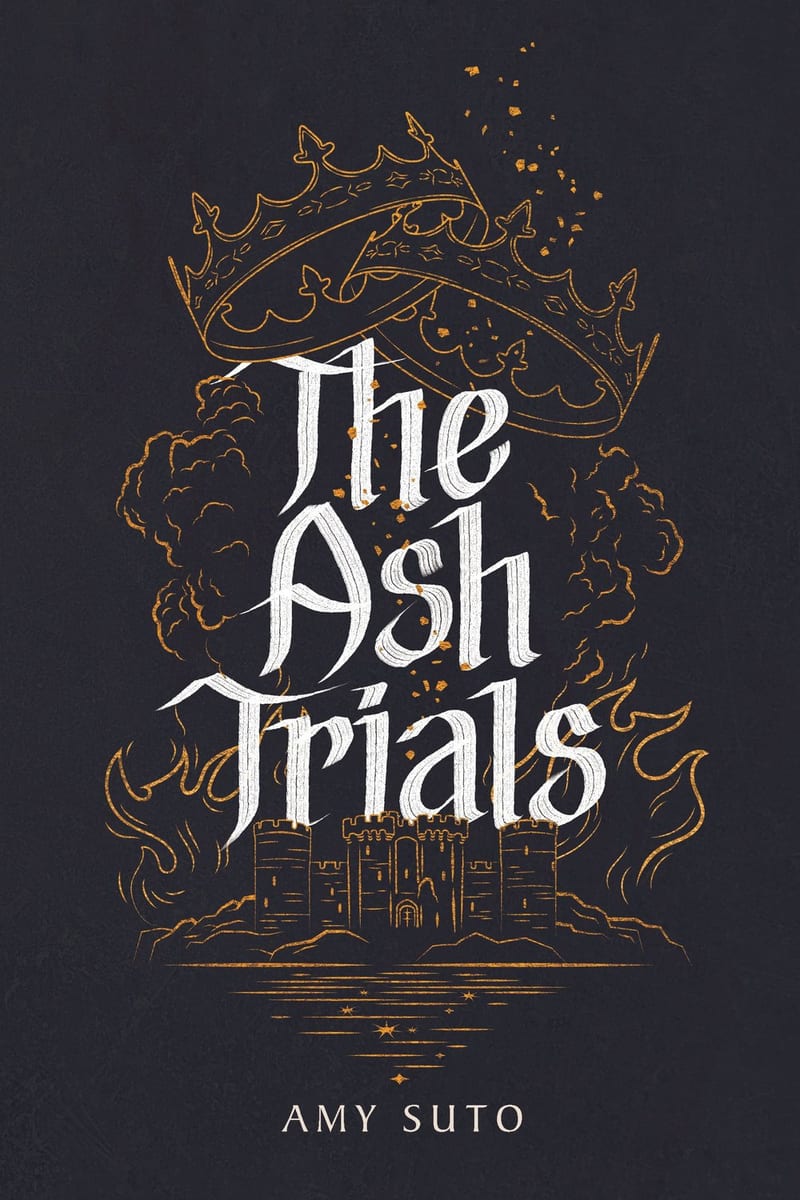
The deadliest game is remembering who you are.
MY DETECTIVE NOVEL: THE NOMAD DETECTIVE

Crime crosses borders, but so does this detective.
MY HOW-TO BOOK: SIX-FIGURE FREELANCE WRITER

Work smarter, not harder — without the burnout.
RECENT POSTS
JOIN THE WRITING JOB BOARD
FOLLOW ME ON IG @SUTOSCIENCE